
Snoring vs. Sleep Apnea: What the Difference Means for Your Health
Your partner nudges you awake at 2 a.m. Again. You grumble, roll over, and drift back to sleep, but they lie there, wide-eyed, listening to the rumble start up once more. Sound familiar? If snoring is disrupting your household, you are far from alone. But here is what many people do not realize: snoring is not always just an annoying habit. Sometimes it is the first audible sign of a medical condition that affects your heart, your brain, and your quality of life.
If you or someone you love has been flagging nighttime noise, understanding the difference between simple snoring and obstructive sleep apnea is one of the most important health conversations you can have. For anyone exploring snoring treatment in Los Angeles, the starting point is knowing what you are actually dealing with, because the two conditions look similar on the surface but carry very different implications for your long-term health. At LA Sinus and Snoring in Beverly Hills, CA, our ENT specialists help patients untangle exactly that question every day.
What Is Snoring, and Why Does It Happen?
Snoring is the sound produced when airflow through your nose and throat causes the surrounding soft tissues to vibrate during sleep. Think of it like air rushing through a partially closed doorway and making the door rattle. The more narrowed the airway, the louder the rattling tends to be.
A number of factors can narrow that airway enough to produce sound:
- Anatomy. A deviated nasal septum, enlarged tonsils, a long soft palate, or excess tissue in the throat can all reduce the space air has to move through.
- Body weight. Fatty tissue around the neck and throat can press inward on the airway, especially when muscles relax during sleep.
- Nasal congestion. Seasonal allergies, chronic sinusitis, or a simple head cold force you to breathe through a partially blocked passage.
- Alcohol and sedatives. These relax the throat muscles more than usual, making vibration, and snoring, more likely.
- Sleep position. Sleeping on your back allows the tongue and soft palate to fall backward, narrowing the airway further.
Importantly, snoring by itself does not mean your breathing is being interrupted. The airway is restricted, yes, but air is still moving through continuously. That distinction matters enormously.
What Is Obstructive Sleep Apnea?
Obstructive sleep apnea (OSA) is a step beyond snoring. With OSA, the airway does not just narrow during sleep, it collapses. Breathing stops entirely, sometimes for ten seconds, sometimes for a minute or longer. The brain eventually senses the oxygen drop, jolts you into a lighter sleep stage to restore muscle tone, and breathing resumes, often with a gasp or a loud snort. This cycle can repeat dozens or even hundreds of times a night, all without the sleeper having any conscious memory of it.
The person sharing the bed, however, tends to notice immediately. Partners of OSA patients frequently describe lying awake listening to snoring that suddenly goes silent, followed by a gasp or choking sound. That silence is the apnea event itself.
What makes OSA medically serious is the cascade of consequences those repeated interruptions trigger. Every time your body fights its way back to breathing, it releases stress hormones, spikes your heart rate, and briefly elevates your blood pressure. Night after night, that cycle takes a measurable toll.
The Health Consequences of Untreated Sleep Apnea
This is where the stakes become very real. Snoring may embarrass you or frustrate your partner. Untreated sleep apnea can shorten your life.
Cardiovascular risk. The repeated oxygen drops and stress hormone surges associated with OSA are directly linked to hypertension, atrial fibrillation, coronary artery disease, and an elevated risk of stroke. Multiple large studies have found that people with untreated moderate-to-severe OSA face significantly higher rates of major cardiac events.
Metabolic effects. Sleep apnea disrupts the hormones that regulate hunger and insulin sensitivity. People with OSA have higher rates of type 2 diabetes and metabolic syndrome, and treating the apnea has been shown to improve glucose control in some patients.
Cognitive and mental health impact. Fragmented sleep prevents the brain from cycling through the deeper stages it needs to consolidate memory, process information, and regulate mood. Patients with untreated OSA frequently report difficulty concentrating, memory lapses, irritability, and depression. Research has also begun exploring links between chronic OSA and accelerated cognitive decline.
Daytime impairment. Excessive daytime sleepiness is one of the most common complaints among OSA patients. This is not ordinary tiredness, it is a neurological consequence of restorative sleep being repeatedly cut short. The risk of falling asleep while driving is measurably higher in people with untreated OSA.
Simple snoring, when it exists without apnea events, does not carry these same systemic risks. But the two conditions exist on a spectrum, and snoring that seems benign today can evolve over time, particularly with weight gain, aging, or worsening nasal obstruction.
Is My Snoring a Sign of Sleep Apnea? Symptoms to Know
This is the question most people searching “is snoring a sign of sleep apnea” really want answered. The honest answer is: it might be, and you need an evaluation to know for certain. That said, several symptoms alongside snoring raise the index of suspicion considerably.
Red flags that suggest OSA rather than simple snoring:
- Your partner has witnessed you stop breathing, gasp, or choke during the night
- You wake up with a dry mouth, sore throat, or headache
- You feel unrefreshed after a full night of sleep, as though you hardly slept at all
- You experience significant daytime sleepiness, including nodding off during quiet activities
- You have difficulty concentrating or notice memory problems
- You feel irritable or low in mood without a clear reason
- You get up to urinate frequently during the night (a less-discussed but common OSA symptom)
- You have high blood pressure that is difficult to control
Features that suggest simple snoring more than OSA:
- You snore only when sleeping on your back and sleep quietly in other positions
- You snore primarily during allergy season or when congested
- You feel rested in the morning and are alert throughout the day
- No one has observed breathing pauses or gasping
Even if your symptoms point toward simple snoring, this distinction is one a clinician needs to confirm. The only way to definitively diagnose or rule out sleep apnea is through a sleep study, either conducted in a lab or via a home sleep testing device that an ENT or sleep specialist orders for you.
Why an ENT Evaluation Is the Right Starting Point
Primary care physicians are often the first to hear about snoring complaints, and a referral to an ENT (otolaryngologist) is a logical and highly productive next step. Here is why seeing an ENT for snoring and sleep apnea concerns makes clinical sense.
An ENT specialist is uniquely positioned to examine the entire upper airway, the nose, nasal passages, the back of the throat, the tonsils, the soft palate, and the base of the tongue. This anatomical picture matters because the location and nature of the obstruction directly influences which treatment options will be most effective for you.
At LA Sinus and Snoring, a Beverly Hills, CA ENT practice focused on exactly these concerns, the evaluation process typically includes a thorough physical examination, often using a small flexible camera (nasal endoscopy) to visualize areas that cannot be seen in a standard exam. If sleep apnea is suspected, appropriate sleep testing is arranged. The results of both inform a treatment plan tailored to you, not a one-size-fits-all protocol.
Treatment options vary widely depending on the underlying cause:
- Nasal obstruction from a deviated septum or chronic sinusitis may respond to medical management or minimally invasive procedures that open the nasal airway.
- Enlarged tonsils or adenoids can be addressed surgically, particularly in patients who have not responded to other approaches.
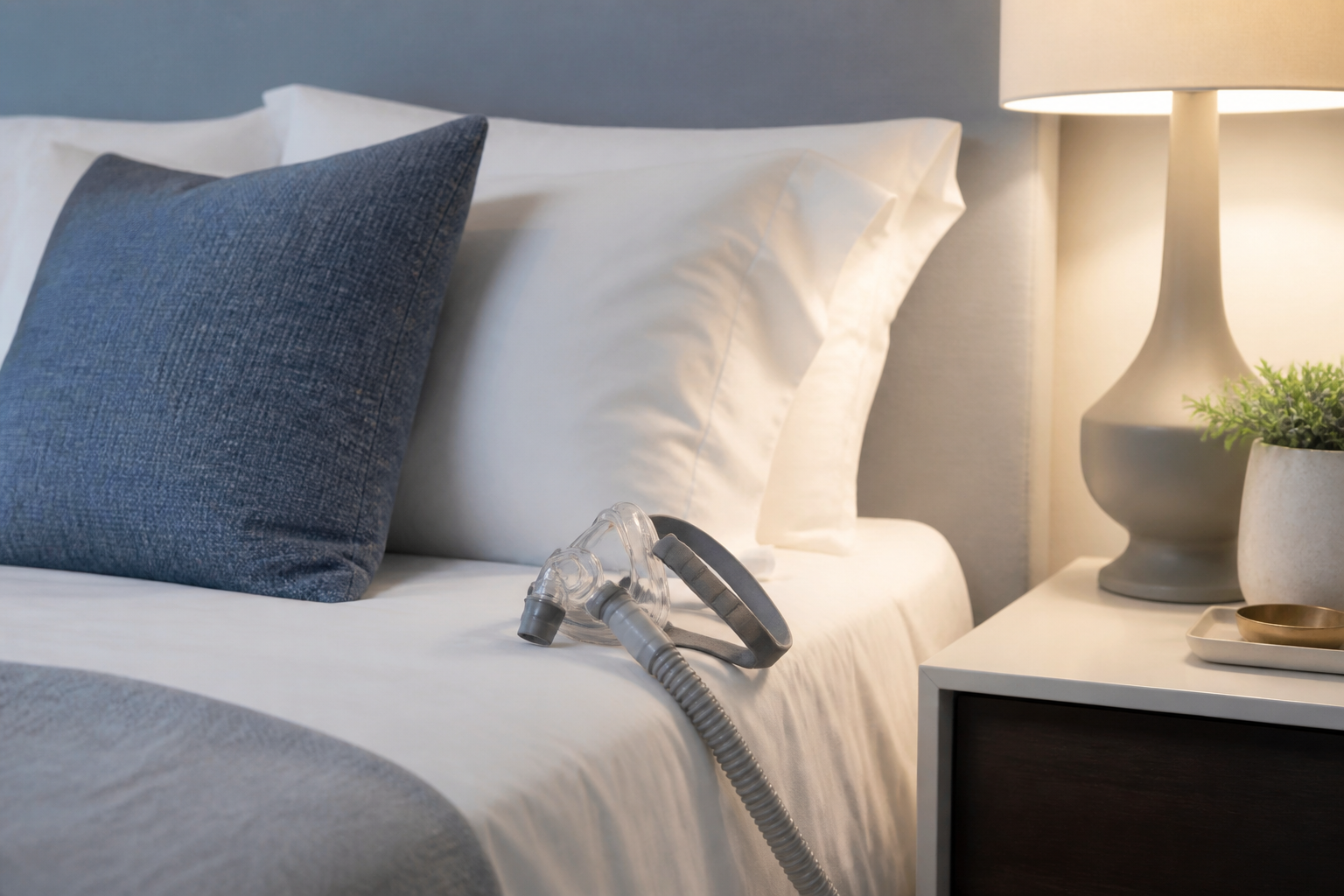
- CPAP therapy remains the gold standard for moderate-to-severe OSA and works by delivering a continuous stream of air pressure that keeps the airway open.
- Oral appliance therapy, fitted by a qualified provider, repositions the jaw to prevent airway collapse and is a well-tolerated option for patients with mild-to-moderate OSA or those who cannot use CPAP.
- Newer surgical procedures, including upper airway stimulation therapy (a small implant that activates the tongue muscles during sleep), offer options for patients who have not found success with other treatments.
The right path depends on your anatomy, your sleep study results, and your personal preferences, all things an ENT evaluation can clarify.
When to Stop Waiting and Make the Appointment
If your partner has mentioned your snoring more than once, or if you are waking up tired despite getting enough hours in bed, this is not something to keep putting off. Snoring can be easy to dismiss because it does not feel like a symptom from the inside. You sleep through it. But the body keeps score.
Beverly Hills residents and patients across the greater Los Angeles area have access to specialized ENT care that can distinguish between a benign anatomical quirk and a condition with real cardiovascular and cognitive stakes. Getting that clarity is straightforward, and treatment, when needed, is often more accessible than people expect.
Do not let another night of disrupted sleep pass without taking the first step.
Contact LA Sinus and Snoring today to schedule a consultation with an ENT specialist in Beverly Hills, CA. Our team will evaluate your symptoms, examine your airway, and help you understand exactly what is happening, and what can be done about it. Better sleep, for you and everyone sharing your home, starts with a single appointment.